
Tackling the toughest topics in veterinary medicine
The Veterinary
Viewfinder
Candid conversations on the issues shaping veterinary medicine.

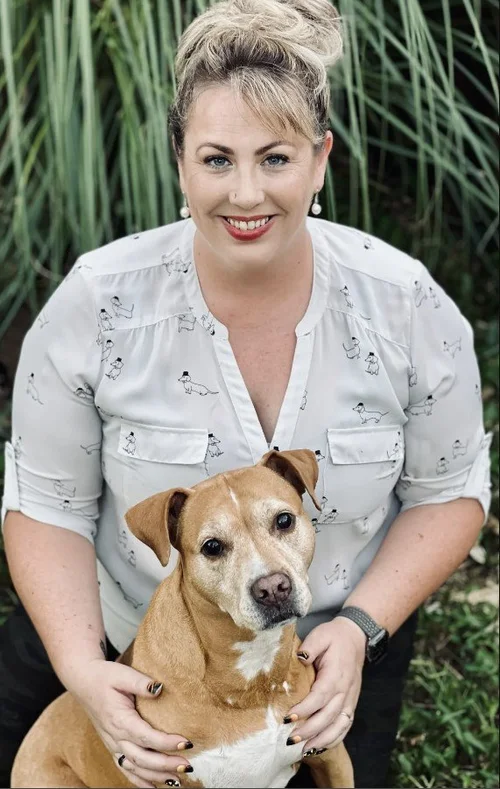 Hosted by Dr. Ernie Ward, DVM & Beckie Mossor, MPA, RVT
Listen & subscribe
New episodes appear here the moment they publish — no need to update this page.
Two perspectives, one profession
Dr. Ernie Ward, DVM
Dr. Ernie Ward is a veterinarian, author, and longtime advocate for pets and the veterinary profession. Based in coastal North Carolina, he founded the Association for Pet Obesity Prevention in 2005 and the World Pet Obesity Association in 2024, pairing public education for pet owners with clinical standards for veterinary teams.
An author and a familiar voice across national media, Ernie is known for putting the profession’s hardest conversations front and center. Since 2016, he and Beckie have co-hosted the Veterinary Viewfinder Podcast, a weekly show that digs into the toughest and most controversial topics in veterinary medicine, features leading voices in the field, and looks for practical answers to the challenges veterinary teams face.
Beckie Mossor, MPA, RVT
Beckie is a Credentialed Veterinary Technician from Southport, NC, and founding director of the American Association of Credentialed Veterinary Technicians, where she has shaped national conversations on technician utilization, representation on veterinary medical boards, and equity in veterinary organizational structures.
Her work has been published in professional outlets, and she presents internationally on the intersections of veterinary medicine, leadership, and advocacy. She is proud to be the first credentialed veterinary technician to serve on the WSAVA Professional Wellness Committee.
Beckie also co-founded the Veterinary Industry Giving Tree, a nonprofit dedicated to helping veterinary professionals through financial hardship, and has co-hosted the Veterinary Viewfinder Podcast for nearly a decade — bringing candid, often provocative conversations and fierce advocacy to the profession.
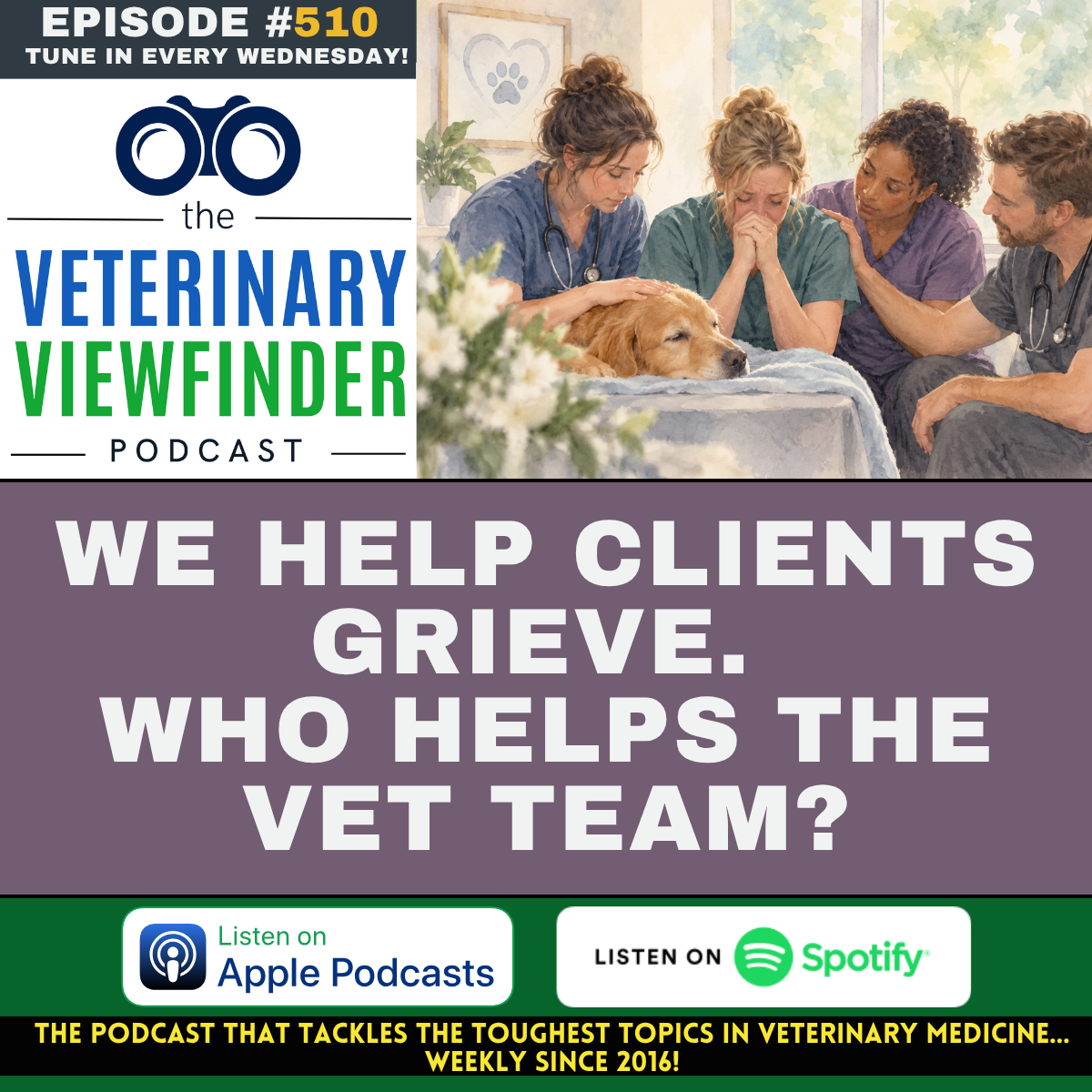
We Help Clients Grieve. Who Helps the Vet Team?
The sympathy card goes out. The next appointment comes in. But when a patient dies, who checks on the people who cared for them?
This week, Dr. Ernie Ward and Beckie Mossor, MPA, RVT, turn the conversation about euthanasia toward the veterinary team. They explore why some losses hit harder, from saying goodbye to a longtime patient to losing an animal everyone worked to save, and why being experienced doesn’t mean being unaffected.
Ernie shares how making room for memories during staff meetings helped his team acknowledge those losses. Beckie discusses when support needs to happen sooner, how a shared journal can give people somewhere to put their feelings, and where veterinary social workers can help. They also consider how to share difficult news, plan around emotionally demanding appointments, and support a colleague facing the loss of their own pet.
For anyone working in a veterinary clinic, this episode offers practical ways to start the conversation before a difficult goodbye. The goal isn’t to make everyone grieve the same way. It’s to give the people supporting your clients some support of their own.
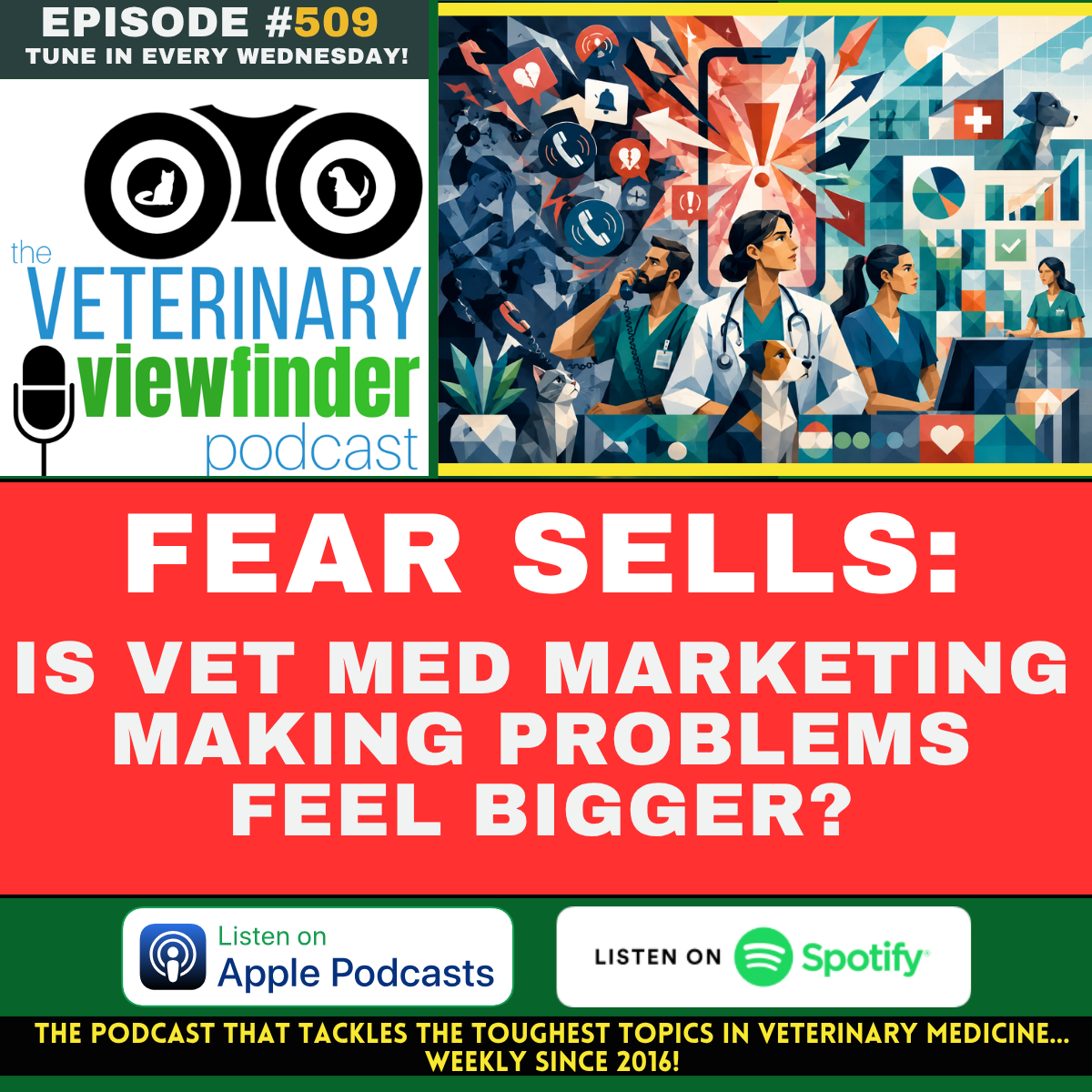
Fear Sells: Is Vet Med Marketing Making Problems Feel Bigger?
A missed call becomes a potential ER visit. An overwhelmed team becomes a business risk. And suddenly, an everyday practice challenge can feel a lot more urgent than it did five minutes ago.
This week, Dr. Ernie Ward and Beckie Mossor, MPA, RVT, take a closer look at fear-based marketing in veterinary medicine and how the way a problem is framed can shape how veterinary teams respond to it.
Using a real veterinary technology ad as their starting point, they explore how messages built around loss, failure, and urgency can add anxiety to already-stretched teams and sometimes push practices toward solutions before they’ve fully understood the underlying problem.
Ernie and Beckie aren’t arguing against technology or outside support. They’re asking for a little more perspective before reacting.
Are calls genuinely being missed, and are emergency rooms experiencing an overload due to them? If so, when does this occur, and why? Is the problem related to staffing, workflow, priorities, or something else entirely?
The takeaway: look at the data, understand the problem first, and recognize when marketing may be turning up the fear.
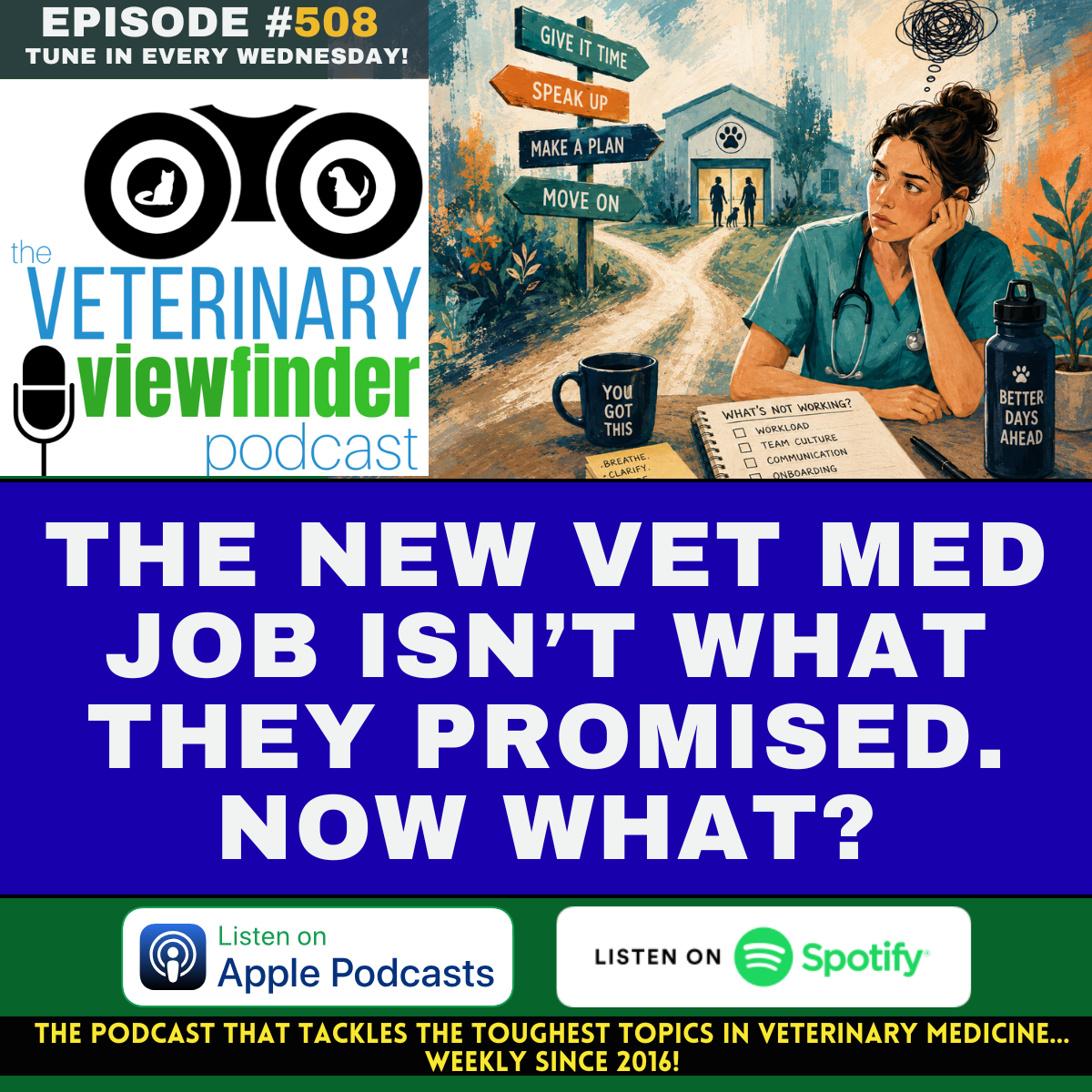
The New Vet Med Job Isn’t What They Promised. Now What?
You accepted the new job, gave notice, and walked into what you thought was a better opportunity. Then, within days, the red flags start piling up. The workload isn’t what you were promised. Training is almost nonexistent. The team feels unwelcoming. Now what?
This week, Dr. Ernie Ward and Beckie Mossor, MPA, RVT, talk about what happens when a new veterinary job doesn’t match the one you interviewed for, and how to decide whether to stay, speak up, or start planning your exit.
They discuss why poor onboarding can be an early warning sign, how money and benefits can make leaving harder, and why simply “giving it more time” can quietly turn a few bad weeks into years of frustration.
Ernie and Beckie also offer a practical approach: identify exactly what isn’t working, decide what needs to change, talk with management, and set a clear timeline for action.
And for practice leaders, there’s a flip side: what happens when the new hire isn’t who you thought you hired?
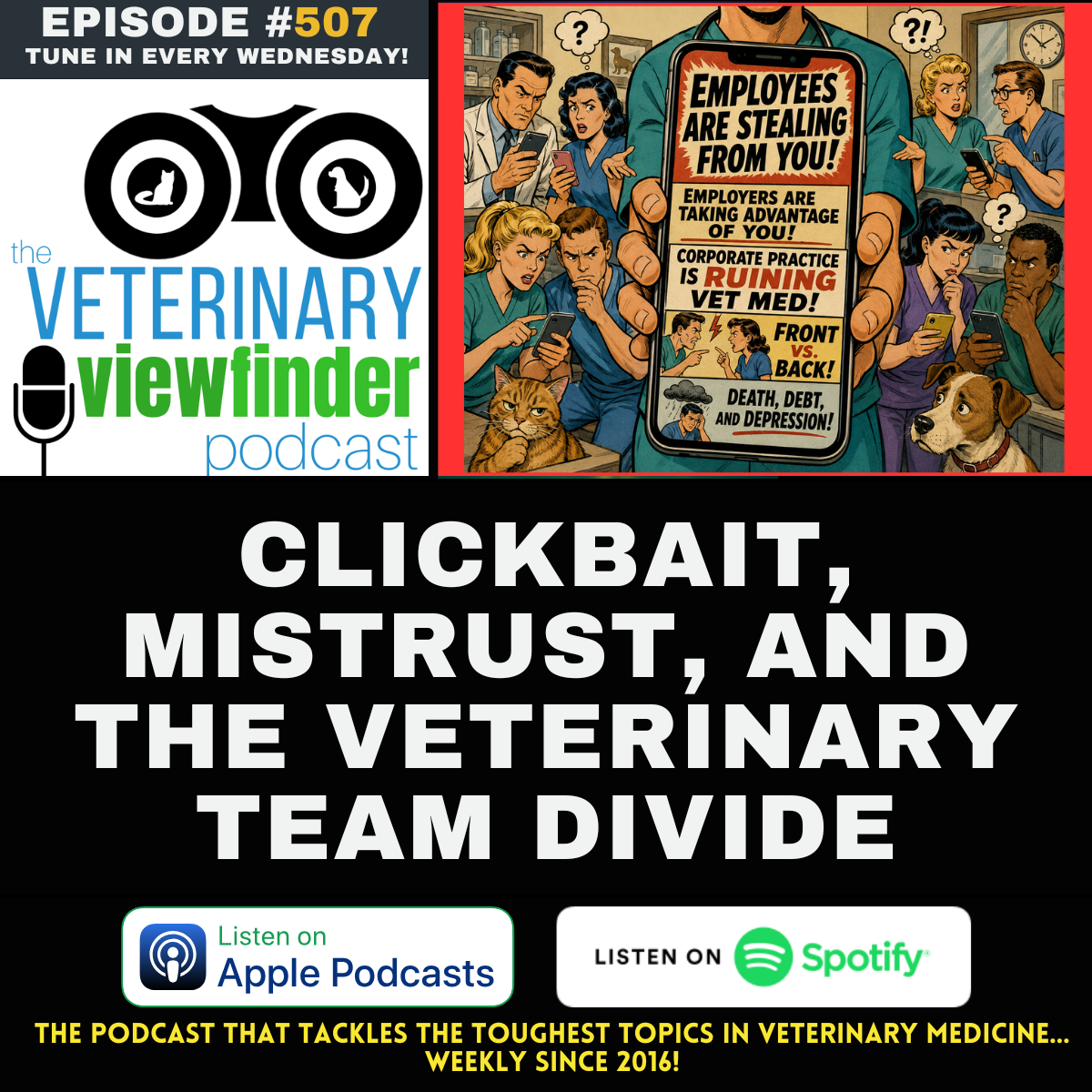
Clickbait, Mistrust, and the Veterinary Team Divide
A headline can do more than earn a click. It can change how veterinary professionals see one another.
This week, Dr. Ernie Ward and Beckie Mossor, MPA, RVT, examine how clickbait and rage-bait framing can deepen mistrust across veterinary teams. Using a provocative article about employee theft as a starting point, they explore what happens when practical business guidance is presented in terms of employers versus employees, managers versus staff, or one part of the hospital versus another.
Ernie and Beckie aren’t arguing against audits, safeguards, accountability, or sound financial controls. They’re asking whether those measures can be discussed without treating every team member as a potential threat.
The conversation expands to other familiar divides, including front versus back, veterinarians versus technicians, and corporate versus independent practice.
They also challenge veterinary publications, professional organizations, and social media creators to consider how headlines shape beliefs, workplace culture, and public perceptions of the profession.
The takeaway: protect the practice, address real problems, and choose language that builds collaboration instead of suspicion.

Mini Cows, Backyard Chickens, and the Veterinary Care Gap
Backyard chickens, miniature cows, goats, pigs, and other unconventional pets are showing up in suburban homes and on social feeds faster than veterinary care can keep pace.
In this episode, Dr. Ernie Ward and Beckie Mossor, MPA, RVT, examine what happens when owners expect a small animal clinic to help with a species the team isn’t trained, equipped, or comfortable treating.
They discuss the real risks of leaving that gap to social media influencers, the pressure already facing large animal veterinarians, and why simply turning people away can damage both animal welfare and community trust.
The conversation also explores a more hopeful side: clinics with genuine interest can use targeted CE, basic equipment, team training, and strong referral relationships to serve an emerging need.
Veterinarians, technicians, and practice managers will leave with practical questions to ask now: Do we have a script for these calls? Do we know where to refer urgent cases? Could this be a service, recruiting, or professional-growth opportunity? And how can we educate owners before a viral pet trend becomes an animal welfare problem?
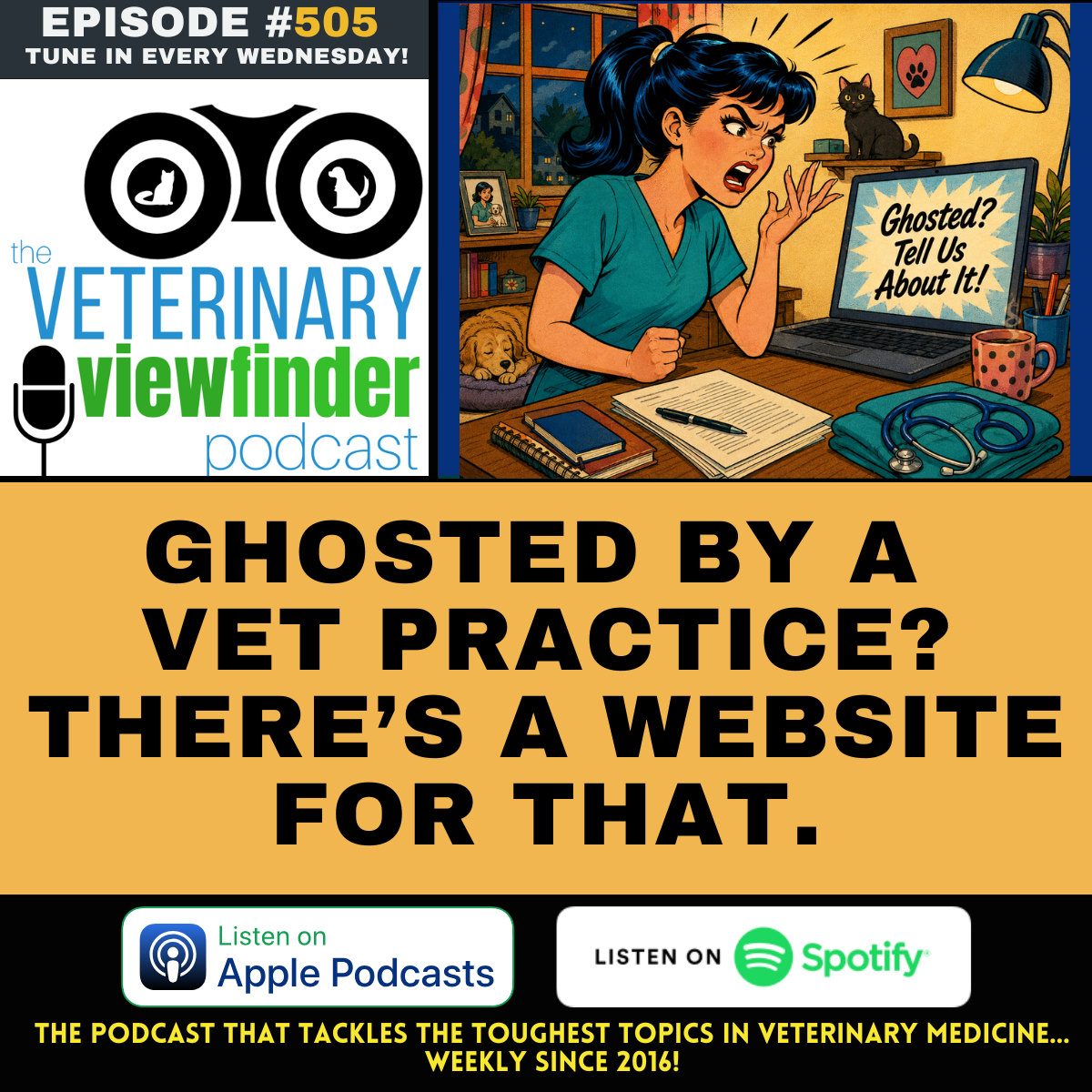
Ghosted by a Vet Practice? There’s a Website for That.
Veterinary employers have long complained about applicants disappearing during the hiring process. Now, candidates who are ghosted after an interview have websites where they can publicly report the employer.
This week, Dr. Ernie Ward and Beckie Mossor, MPA, RVT, explore what these anonymous reporting sites reveal about hiring culture in the U.S., and perhaps in veterinary medicine.
Beckie explains why silence after an interview can create more than frustration. Candidates may put other opportunities on hold because they believe a decision is still pending. Ernie argues that while practices may not owe every applicant a personal response, anyone who has invested time in an interview deserves a clear and timely answer.
They discuss the risks of unverified online reports, when a simple email is enough, and why post-interview communication should be part of every practice’s hiring process. They also offer practical advice for candidates handling rejection without damaging future opportunities.
In a small profession, failing to respond doesn’t just end one conversation. It can affect a practice’s reputation and cost it a strong future hire.
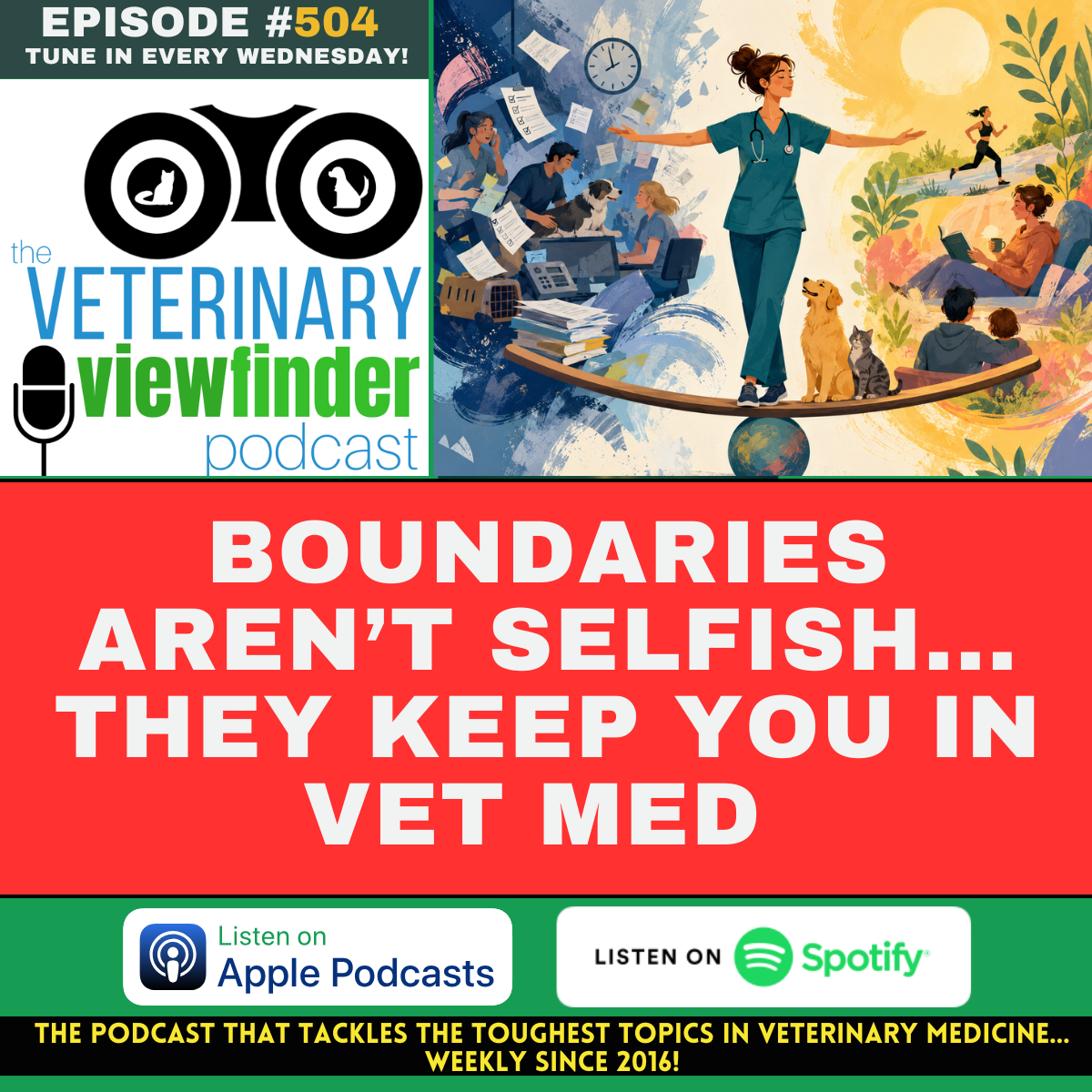
Boundaries Aren’t Selfish—They Keep You in Vet Med
Why can taking PTO, stepping away during the holidays, leaving on time, or protecting even one hour for yourself feel like letting down your team or the people you love?
This week, Dr. Ernie Ward and Beckie Mossor, MPA, RVT, unpack the guilt veterinary professionals often carry when they step away from the clinic. Their message is simple: feeling guilty is not the same as being selfish, and discomfort does not mean a boundary is wrong.
Beckie reflects on her own evolution from a “baby technician” who felt she had something to prove to someone who learned that rest and boundaries are worth the initial discomfort. As she reminds listeners, “You can’t expect that free time to just come.” Even five, ten, or fifteen protected minutes can be a meaningful place to begin, and, after taking that time, “you do come back better.”
Ernie shares the lesson that has guided him through decades in veterinary medicine: “If I were trying to protect my time to improve my overall health, that was not selfish. It was essential.” In fact, he makes a strong case for how protecting your well-being can help you better support your family, coworkers, clients, and patients over the long term.
Our hosts also challenge practice owners, managers, medical directors, and teammates to examine the culture surrounding PTO and self-care. Comments like “must be nice” or “I wish I could do that” can turn time spent on personal growth into shame. Thoughtful scheduling, appropriate coverage, and genuine encouragement can make healthy boundaries possible, and business leaders must lead by example.
They also point out that self-care is not limited to vacations or spa days. It may be a walk, a workout, a chapter of a book, a few quiet minutes, or meaningful time with the people you love.
The goal is not perfect balance. It is returning with more energy, patience, and perspective, and building a veterinary career that leaves room for a life beyond the clinic.
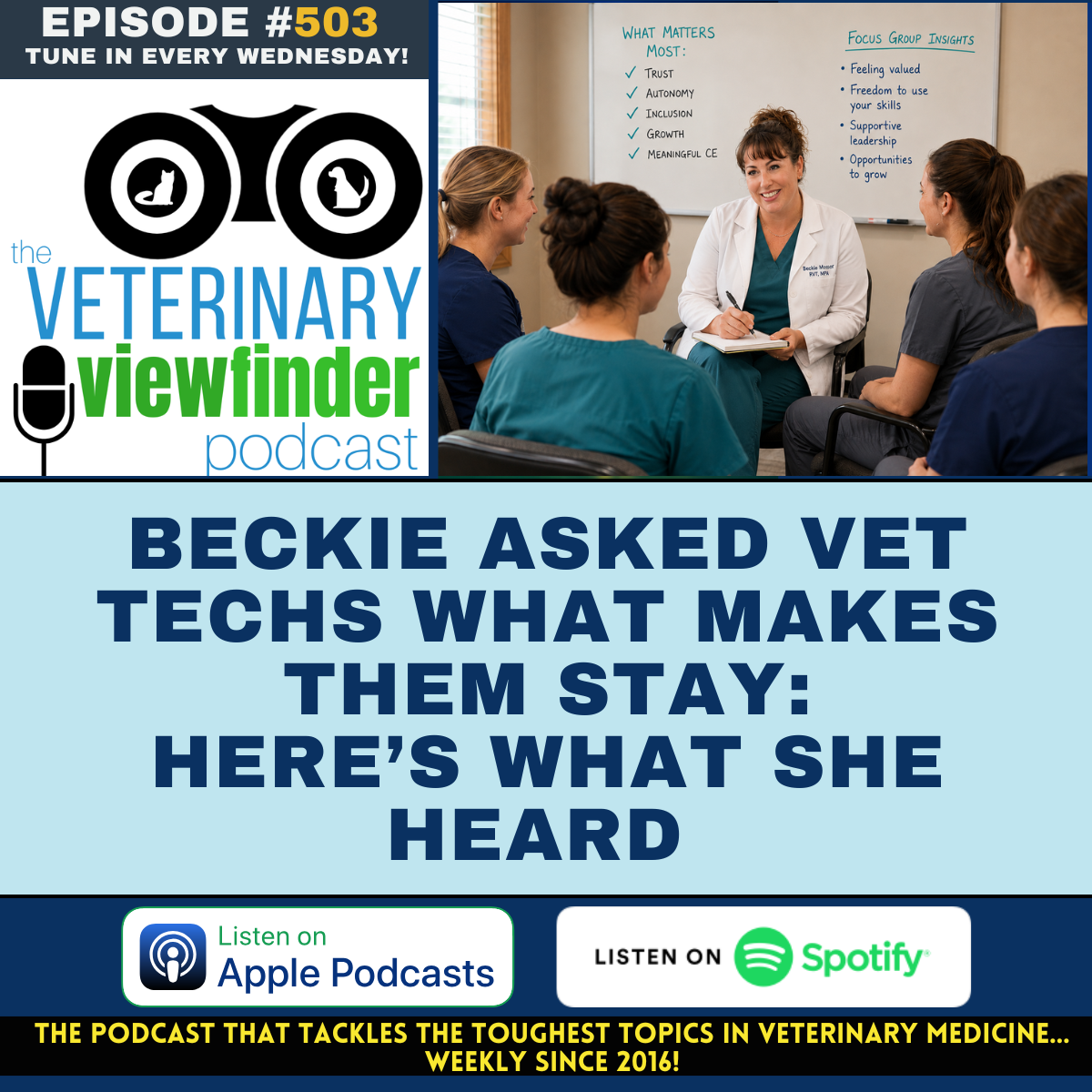
Beckie Asked Vet Techs What Makes Them Stay—Here’s What She Heard
Keeping skilled veterinary team members isn’t simply about letting them perform more tasks. In this episode, Dr. Ernie Ward and Beckie Mossor, MPA, RVT, explore Beckie’s early University of North Carolina at Chapel Hill doctoral research into what helps credentialed veterinary technicians feel valued, utilized, and more likely to stay.
The findings challenge a familiar assumption in veterinary medicine: working at the top of your license is important, but it isn’t enough. Trust, autonomy, inclusion in clinical decisions, meaningful continuing education, and the freedom to apply new skills may matter just as much as the skills themselves.
Ernie and Beckie discuss why surgery teams often model this well, how micromanagement can undermine highly capable employees, and why a generous CE budget only works when team members can use what they learn.
They also examine the important difference between keeping people busy and helping them feel fulfilled.
For veterinarians, technicians, practice managers, and clinic leaders, the episode offers one practical question: Are you deciding that your team feels utilized—or are you asking them?
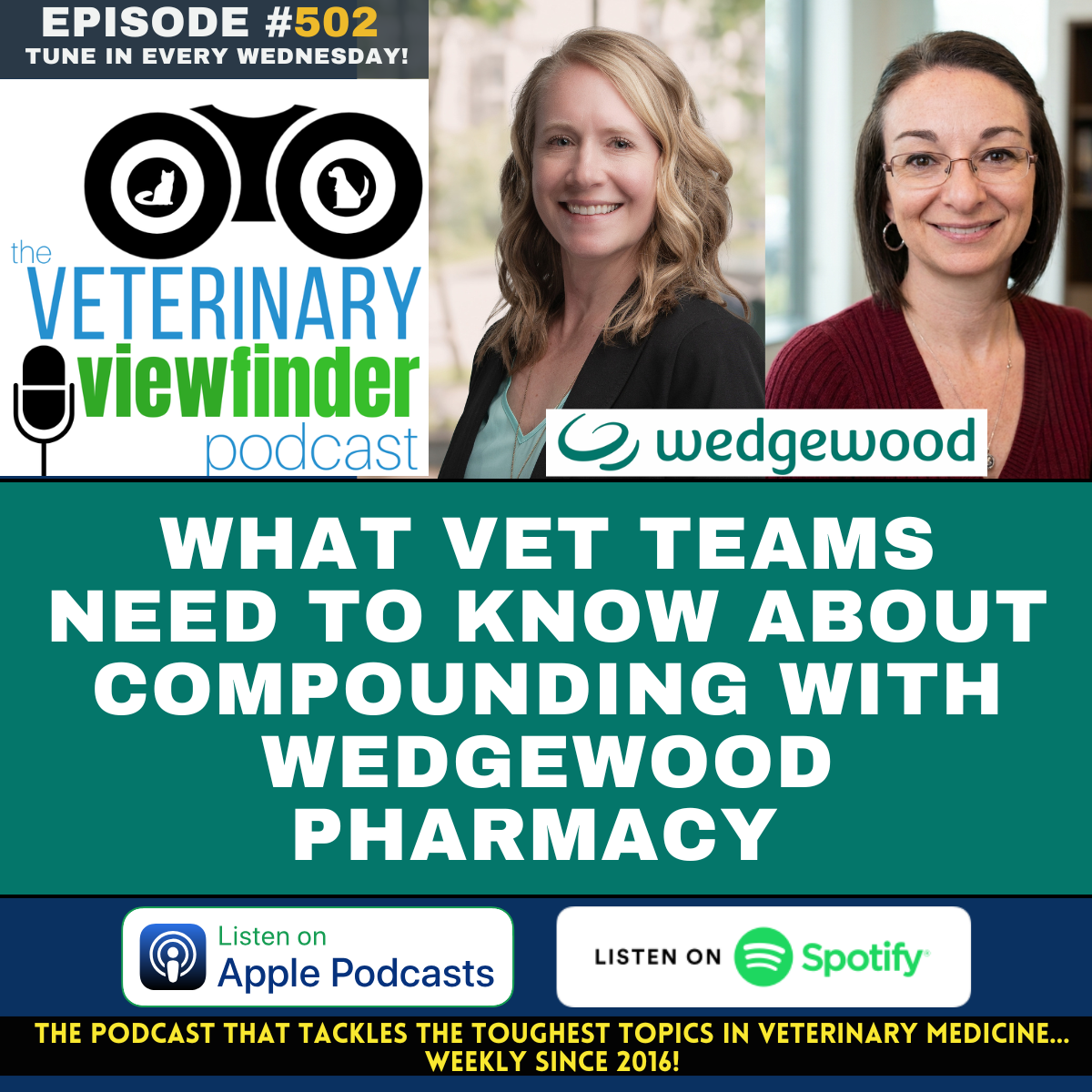
What Vet Teams Need to Know About Compounding with Wedgewood Pharmacy
Getting medications into pets sounds simple—until the patient refuses the tablet, the dose doesn’t fit, the flavor is a disaster, or the client physically can’t make the plan work.
This week, Dr. Ernie Ward and Beckie Mossor, MPA, RVT, talk with Dr. Rae Hutchins and Dr. Jennifer Merlo from Wedgewood Pharmacy about how veterinary compounding can support better patient care when commercially available medications are not the right fit.
The conversation covers where compounding helps most, where it should not replace FDA-approved commercial products, and why quality matters more than convenience or cost.
The group also digs into common legal and regulatory confusion, including GFI 256, patient-specific prescriptions, office stock, and why veterinarians should understand their state’s rules. Dr. Hutchins also discusses how Wedgewood Pharmacy has transformed the treatment of Feline Infectious Peritonitis (FIP) by providing compounded GS-441524 and Molnupiravir.
Credentialed veterinary technicians (CrVTs) get a seat at the table, too, as we discuss how technician insight can improve ordering, education, and real-world medication outcomes, along with how Wedgewood Pharmacy is recognizing CrVTs both internally and externally.
Practical, grounded, and clinic-relevant, this episode helps veterinary teams feel more confident using compounding medications as part of thoughtful medical care.
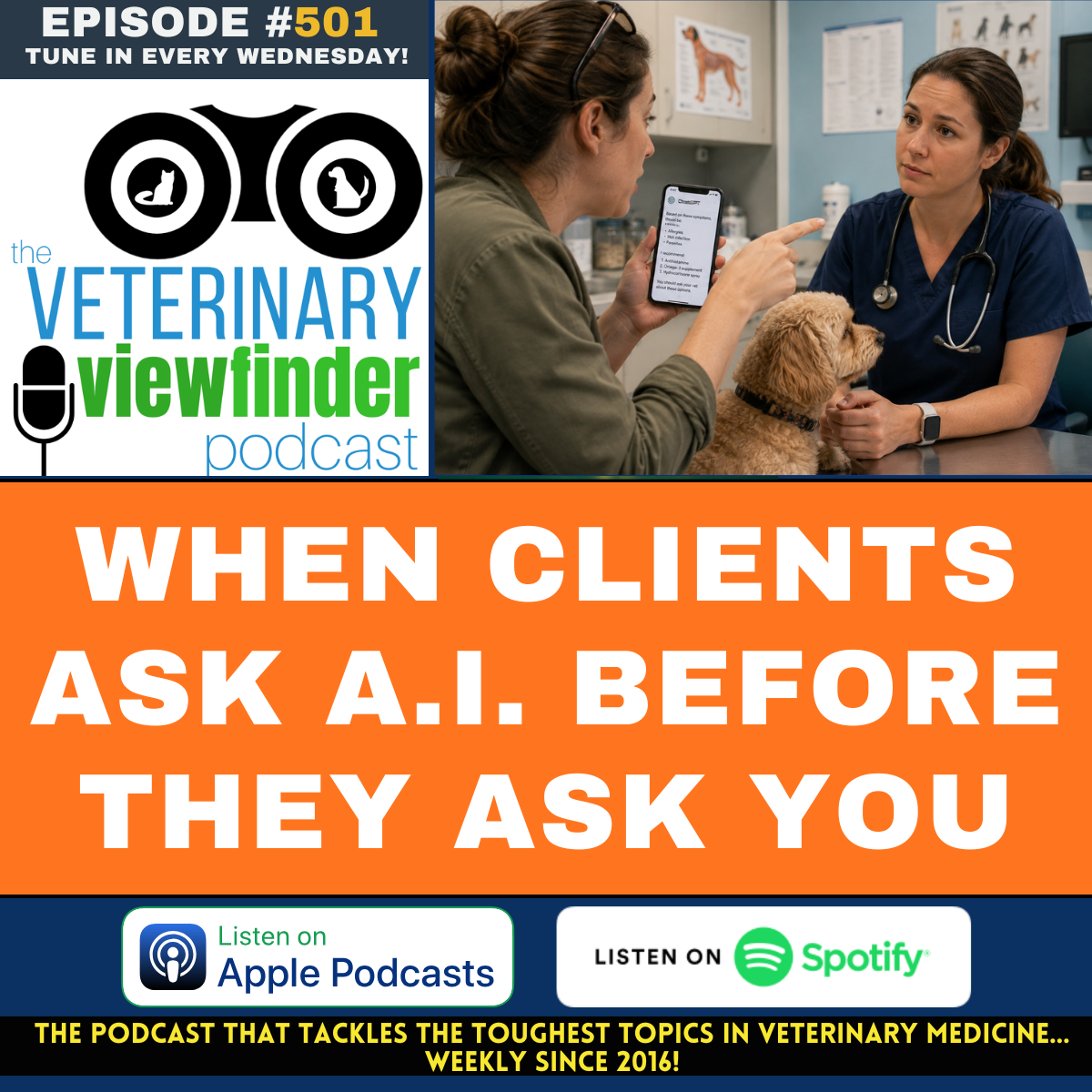
When Clients Ask AI Before They Ask You
More pet owners are asking an AI agent before they call the clinic.
They’re walking into the exam room with AI-generated ideas, possible causes, treatment questions, and sometimes a pretty strong opinion about what should happen next.
So how should veterinary teams respond?
In this 501st weekly episode of The Veterinary Viewfinder, Dr. Ernie Ward and Beckie Mossor, MPA, RVT, talk about what happens when AI becomes part of the client conversation. Not as a replacement for veterinary care, but as a new starting point for questions, concerns, and expectations.
The goal isn’t to shut clients down. It’s to keep them engaged, acknowledge their curiosity, and bring the conversation back to the pet in front of you, the physical exam, and trusted clinical judgment. Our hosts walk through the various responses many vet teams give and explain what may be the best communication approach to this potentially prickly situation in today’s clinics.
While AI can provide clients with information, it’s up to veterinary teams to put that information in context.
As Dr. Ward advises, “Be what an AI never can: be present, conduct a hands-on examination, and remain accountable to this patient in this room at this time. Let the client keep her curiosity. Just make sure she leaves knowing the difference between a search result and a diagnosis.”
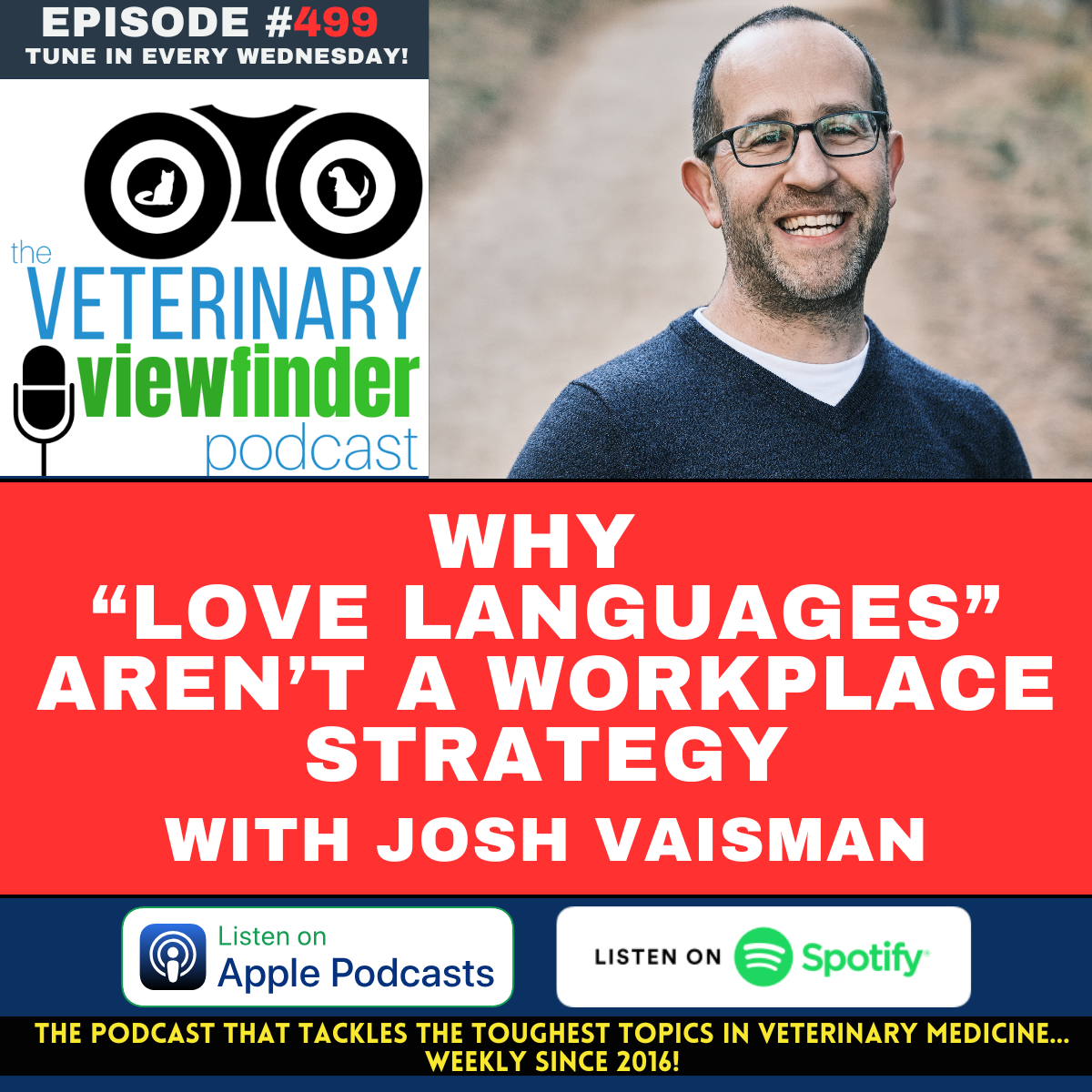
Why “Love Languages” Aren’t a Workplace Strategy
When was the last time you felt truly appreciated at work?
This week on the Veterinary Viewfinder, Dr. Ernie Ward and Beckie Mossor, MPA, RVT, are joined by Josh Vaisman, MAPPCP (PgD), CCFP, Lead Positive Change Agent, author of Lead to Thrive: The Science of Crafting a Positive Veterinary Culture, and founder of the Flourish Academy.
Together, they ask whether veterinary medicine took the “love languages” idea too far in workplace culture. Not because appreciation doesn’t matter, but because a survey, checklist, or favorite “language” can’t replace real human connection.
Josh explains what recent research suggests about love languages, why appreciation has to be personal and situational, and how small, consistent actions often matter more than big gestures. From noticing when a teammate is overwhelmed, to saying thank you with impact, to repairing after conflict, this episode offers a more practical way to help veterinary teams feel seen, valued, and needed.
Because appreciation isn’t a box to check. It’s a relationship to build.
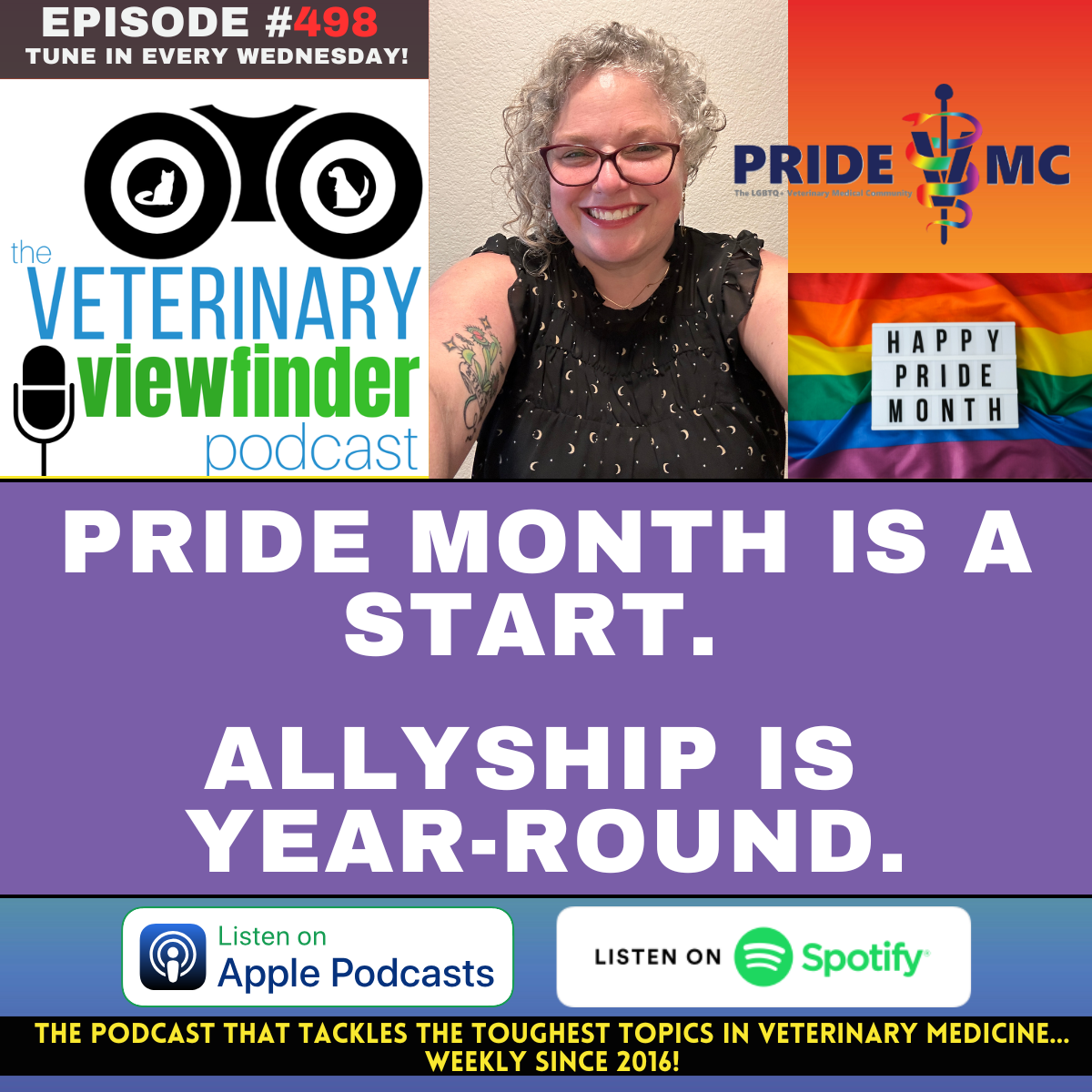
Pride Month Is a Start. Allyship Is Year-Round.
Pride Month gives veterinary teams a chance to celebrate LGBTQ+ colleagues and clients, but real allyship has to continue long after June. This week, Dr. Ernie Ward and Beckie Mossor, MPA, RVT, talk with Stephanie Goss, CEO of PrideVMC, about how veterinary practices can move beyond rainbow stickers and build support into everyday clinic culture.
Stephanie shares her path to and through veterinary medicine, the work of PrideVMC, and why visibility, community, mentorship, and leadership opportunities matter for LGBTQ+ veterinary professionals.
The conversation focuses on practical steps every clinic can take: normalizing pronouns without forcing anyone to disclose, reviewing forms for assumptions about gender and family structure, practicing respectful introductions, and creating a workplace where people feel safe speaking up when something goes wrong.
This episode is for veterinarians, technicians, CSRs, managers, and practice owners who want to show up better. Allyship doesn’t have to be perfect. It does have to be consistent, respectful, and year-round.
The conversations behind the care
Listen wherever you get podcasts
Have a guest or topic idea?
Suggestions, questions, and guest pitches are always welcome. The fastest way to reach the show is by email.